
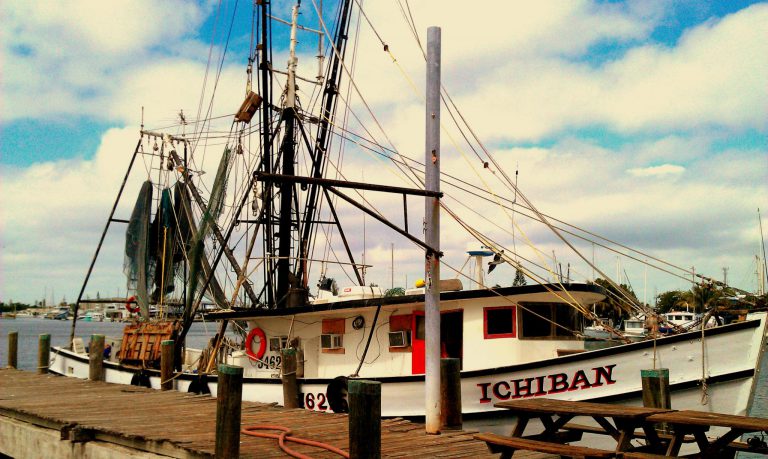
Jorge Blanco Jr., a local lobsterman in the Florida Keys, joined Good Morning Keys on KeysTalk 96.9/102.5FM this morning to talk about the industry.
Local lobstermen have been struggling recently due to imports on lobster.
Blanco explained, “Right now we are the reality of the situation, I got some bad news this morning that some of our guys right across from us, their price is dropping to $4.50, not even five. Right now it’s $4.50. These imports that are coming in are really taking a big hit on us. There’s no way we can compete. They’re killing us financially with the pricing, and they’re killing us because they’re taking over our product before it even gets here. They’re going unchecked, and it’s just a monster that keeps growing and growing.”
How long has Blanco been in the lobster business?
He said, “I’m born and raised in Key West Florida. I’m a fifth generation conch down here. My family’s been here over 100 years, and this is generational, passed down from my grandfather to my father to me, and my dream is to pass it on to my boys when they get older, too. And it doesn’t look like that’s going to happen. As it’s going now, it’s not going to make it. There’s so many things that’s working against us right now. We decided to do this to bring awareness, because our next door neighbors and everybody here doesn’t realize what’s really going on. It’s a sad day when the backs of commercial fishermen that this town was built on aren’t going to be here no more, and we want to prevent that. We’re hard working men. We all have a lot of families here. We support our locals. When we go to restaurants, we buy our supplies here and everything else. And it’s getting to the point where families have been here for decades, have moved out of town, and there’s less and less of us every year, and this is the year we will lose over 30% of our guys, and any type of bad stories we get, we’re going to lose a lot more than that, and we’re scared.”
Is it the price competition from other countries that’s doing this?
Blanco said, “Honduras, Mexico, Nicaragua, even Bahamas, they’re getting free trade. They’re not getting hit with tariffs. They’re not regulated like we are. These guys go out there 15, 20 years ago, they didn’t have the equipment or the technology to do what they’re doing now. But unfortunately, us buying so many imports and all this money going into these countries, we’ve fed that monster. And these guys go out there everything they catch, they bring home, whether it’s fish or lobster. And when I speak on this, I’m speaking on behalf of commercial fishermen, not just the lobster industry, it’s all of us, with our grouper guys, our yellow tail guys, everything else. The sad thing is, is they’re real close to us. We share the same gulf as them, and we are so regulated with areas where we could fish with licensing to that type of trap that we fish. We don’t complain about that, because we’re conservationists here. We want this, like I said earlier, I want this for my kids. I want this for the other families here to keep going. And these people next to us, they don’t think about tomorrow, they think about the day, and they fish whatever type of trap, whatever times throughout the year. They’re really raping our oceans, and nobody’s saying or doing anything. We just keep sending money so they could do this. And we need the most awareness we can and bring this up so everybody knows about this.”
Could the tariffs President Donald Trump has proposed help?
Blanco insisted, “Yes, we need Trump. We need to hit them with the tariffs to level the field, to discourage that being bought. And to be honest with you, what I really would like to see is you have a lot of people from NOAA and PETA and all this stuff that’s always been on our backs, that they’ve always tried to hit us with sanctuaries, new regulations. This is being over fished. That’s being over fished. I would like them to go to the Port of Miami and open up those boxes with imported fish. And when they see the undersized hog snappers, the undersized red snappers, the little groupers and even undersized tails that come through on a daily basis, I would encourage them, if they really care about the environment and not to pick on us fishermen, but let’s work together and shut that down, because, like I said, those fish that lay their eggs, the lobsters that lay their eggs, they’re the same as ours right here. The difference is they’re getting killed and caught before they even get a chance to produce or even send that over. It’s like a domino effect. They lay their eggs upstream of the current from us, that feeds us, our eggers lay here and they feed and it’s getting stopped before even get to us, because of this overfishing. And all this overfishing is coming from us, buying their product and they’re supplying us with that product, and we’re doing it to ourselves. The sad thing about all this, you would say, well, I go to the restaurant if they’re getting $3 a pound, or maybe I’ll pay $8 for a lobster at the restaurant. No, the ones that are getting messed over here is us as fishermen and the consumers that buy it at a restaurant because your prices haven’t changed. You guys are still paying top dollar for a product that you all think was caught here in your backyard, and that the fact of the matter is it came from over 100 something miles away and further. Rather, it’s Brazil, Honduras, whatever we’re we’re all getting messed over. The guys away. They’re allowed to do this. They’re going unchecked. If something doesn’t happen now, we’re done.”
So the fish and lobster in Miami can go to market without size standards?
Blanco said, “We were told that there’s so much in there, there’s so much to check. Basically, they were turning their blind eye at this. There’s money being spread around everywhere and they could quote me on this, for every 1,500 pounds of seafood product, whether it’s fish or whatever, I guarantee you’re going to find over 200 pounds of product that I would lose my boat and go to jail for if it was caught on my boat. I guarantee you and these guys are doing it wide open. Whether it’s the species that’s not supposed to be here, that is illegal for us to catch or whether it’s just undersized and the thing is when I was a kid, we would go to areas, new grounds. We call it middle ground, down to the west, you would have a cold front come by. You pull 100 traps, you would catch 1,000 pounds of crawfish. Now, if you go pull 1,000 traps and you catch 800 pounds, you had a good day. It doesn’t exist. We were thinking, maybe it’s water quality. No. I have a good friend of mine, he just got back Honduras, and he talked to a local fishermen over there. There were seven boats over there that are double the size of mine, double the equipment we have. They have the same technology and even more. And those guys are producing 100,000 pounds of tails every year, each boat. 100,000 pounds of tails is 300,000 pounds of lobster because the tail ratio is three to one. You’ve got seven boats doing that, and that place 15, 20 years ago, probably didn’t produce 300,000 pounds of lobster the whole year between everybody. So that lobster got processed two months ago and was sent right here, Key West Florida, Florida Keys and Miami, and that is the lobster you’re eating in your restaurants right now. And I haven’t pulled my first trap yet. That’s the issue we’re having. It’s a shame what’s going on. We need people to contact our Congressmen, we need Trump aware of this. We need to make America seafood great again, is what we need. Everybody’s preaching about these tariffs, and we’re preaching about that and I don’t think it’s our guy’s fault right now. I just think there’s no awareness. They don’t know what the problem is, because I know they had a problem in the Midwest with the farmers with the same type of tariff. Trump went in and hit them with those tariffs. And you know what? It leveled them out. We need awareness. We need to bring this to their attention is what we need right here. We need everybody to call these guys. And the more the word gets out, the more this is talked about, it’s the only way we’ve got a surviving chance at this.”
Can legislative action help?
Blanco confirmed, “Absolutely. You miss 100% of the pitches you don’t take. You got to swing the ball, to hit the bat, and, hopefully it sticks somewhere. I know sitting at home, we’re just going to go out of business and we’re going to be a pastime. This is going to be stuff that I would tell my grandkids, oh yeah, when we used to fish, because at the end of the day, the only thing you’ll see down here is going to be a charter boat and a sandbar trip. That’s only thing you’ll see, because when I was a kid, there was a fish house on every corner. Now there’s two left, and this is a chain. It’s not right. We’re all family orientated here. A lot of times the fishermen get a bad rap from other areas. But this is a family community. We all work together, we want all of us to thrive just like everybody else. And it’s a shame that something like this is going to go away.”
While we’re very focused on protecting our resources, it sounds like it’s a free for all in other places.
Blanco said, “It is. It’s literally in our backyard. You’ve got fish houses right there that are importing containers of frozen tails that they’ve been putting in dip to make them look prettier, which, that’s not good for you as well. We’ve got fresh live lobster here, and all they’re doing is changing the packages and selling them like we caught them here. It’s a shame, and it’s our own people in our backyard doing this to us. They’re the ones that do that. A lot of these guys here will say, oh, we need to stick together, not leave the dock. Don’t throw our traps in. We’re going to show them. Maybe you did that 20 years ago. That might have worked. Right now, there’s so much imported product coming in right now that we will be doing them a favor if our boats didn’t leave the dock. That’s the fact. We right now are a nuisance to them, that we’re complaining, and we’re going out fishing because they don’t want and they don’t need our product right now. This is fish houses right out of Marathon doing this right now. They dropped the price this morning. I got word $4.50. That is criminal. We get up in the morning, and all of us here, not just fishermen, if you’re commercial guy, if you’re your contract or whatever, we get up wanting to go to work because we know we work, we’re going to get paid. No, that’s not the case with us. We go to work, we’re scared to go to work because we might go more in debt. Because if I go out today and I don’t catch over 1,000 pounds, I go backwards because I can’t pay my guys. I just spent $8,000 on my hydraulic clutch and my hoses. If I go out and I blow a hose or something like that, I lost my day for the workers, and I’ve got to pay for that, so I went right back in debt again. That’s what we’re dealing with. That’s how serious this is, that I can’t get up in the morning and say, I’ve got to go work so I can pay this bill. No, I’ve got to get up in the morning to hope I can just get by so my guys that are working for me can eat. I feed six families off my two lobster boats, and if I don’t leave the dock, they don’t get paid. The only bad thing is me, by paying them, I’m going more and more into debt more and more in our business. It’s not just me, it’s all of us as fishermen right now. It’s scary. This is really scary, and we need people to rally behind us. We need to come together as a community, and we need something to happen, because this is it.”
Is there a way for people to reach out to learn more and see how they can get involved?
Blanco said, “I’m based out of Fishbusterz in Key West. They can come by and just ask for me. The other thing is, too, is the stone crabs right now, that’s a pretty good market, because it’s a domestic market. You don’t import crab from anywhere else, because the only place where you get stone crab from is from the Florida Keys. We would like to be able to process down here, where we’ve got a steady price, where we can survive on. Keep it here in America. Keep our money here. We don’t need to send this to other countries. Let’s keep the flow here. We would like to see something like that get done. We’ve been overlooked. Nobody knows about it. We need to get something going. We definitely need people to send them emails. Send them letters. We’ve got friends family, we’re dying breed. There’s a lot of good people, a lot of hard working people, people that this is all we know. This trait, you can’t go to college and learn this. This is something passed down, generational, generational. You don’t learn this overnight. It’s a shame to see this. My dad came in 1960 from Cuba. He was a fisherman in Cuba, brought that over here. He paid taxes, hard working, did everything legit. This is his legacy, just like all these other fishermen’s legacies, this is the American dream. And you know what? It’s getting taken away from us and we’re giving it to another country. That’s the sad thing about this. This was a fishery down here that was so sustainable. We could live comfortably. We gave back to our communities, all these fishermen here. You think we get home at eight o’clock at night, we want to cook dinner? No, we take our kids out. We go eat at these local restaurants. We look out for one another. Whenever I got my kids, teachers, coaches, whatever, to ask for lobster, we don’t charge them. We have to give it to them, because we look out for one another down here and this is all going away. That way of life is disappearing. That’s why I want to say, I mean it not just to be political, but we need to make America seafood great again because it’s a great product. It’s something that that I don’t want to see disappear.”